There is something magical about the first monsoon rain in India. The dusty roads turn green, the scent of wet earth fills the air, and hidden streams suddenly become roaring waterfalls. A few years ago, while driving through the mist-covered hills of the Western Ghats, I remember stopping my car after hearing a thunder-like sound in the distance. As the fog slowly lifted, a giant waterfall appeared, crashing down from the mountains with incredible force. That moment reminded me why monsoon is not just a season in India—it is an experience. If you're planning a rainy-season escape in 2026, these waterfalls deserve a place on your travel bucket list.
1. Jog Falls, Karnataka
There are waterfalls that look beautiful in photos, and then there are waterfalls that make you stop talking for a moment when you see them in person. Jog Falls belongs to the second category. During the peak monsoon months, the Sharavathi River pours down from a height of nearly 830 feet, creating a thunderous roar that echoes across the valley. As clouds drift through the Western Ghats and the surrounding forests turn emerald green, the entire landscape feels almost unreal.
What makes Jog Falls special is not just the waterfall itself but the journey leading to it. The winding roads through the Western Ghats, small villages covered in mist, and occasional viewpoints overlooking deep valleys make the trip equally memorable. If you're planning a monsoon road trip in South India, Jog Falls deserves a place near the top of your list.
What Budget Should You Plan?
A weekend trip to Jog Falls can comfortably fit different budgets.
Backpackers and solo travelers can complete the trip within ₹3,000–₹5,000 by choosing local guesthouses and public transport.
Couples and families usually spend around ₹6,000–₹10,000 for better hotels, private transport, and local sightseeing.
If you're looking for a premium monsoon getaway with resort stays in the Western Ghats, expect a budget of ₹12,000 or more.
The good news is that the waterfall itself is the main attraction, so you don't need expensive activities to enjoy the destination.
When Does Jog Falls Look Its Best?
While the monsoon officially begins in June, the waterfall reaches its most dramatic form between late July and early September. This is when the Sharavathi River is fed by continuous rainfall across the Western Ghats, creating the powerful multi-stream cascade that Jog Falls is famous for.
If possible, avoid visiting immediately after heavy storms. A day with light rain and moving clouds often provides the best views and photographs.
Local Tips Most Travel Guides Won't Tell You
Many travelers leave after seeing the main viewpoint, but some of the best panoramic views are found at lesser-known roadside stops a few kilometers before reaching the falls.
If you're driving from Bengaluru or Mysuru, consider staying overnight instead of rushing back. The sunrise mist over the Western Ghats creates some of the most beautiful scenery in the region.
Monsoon weekends attract large crowds. Arriving before 8 AM not only helps avoid traffic but also gives you clearer views before clouds become too dense.
The real magic of Jog Falls is often during short breaks in the rain. Don't leave immediately if visibility drops; waiting 20–30 minutes can completely transform the view.
Local eateries around Jog Falls serve authentic Karnataka meals that many tourists overlook while searching for larger restaurants. Trying regional cuisine often becomes one of the highlights of the trip.
2. Dudhsagar Falls, Goa
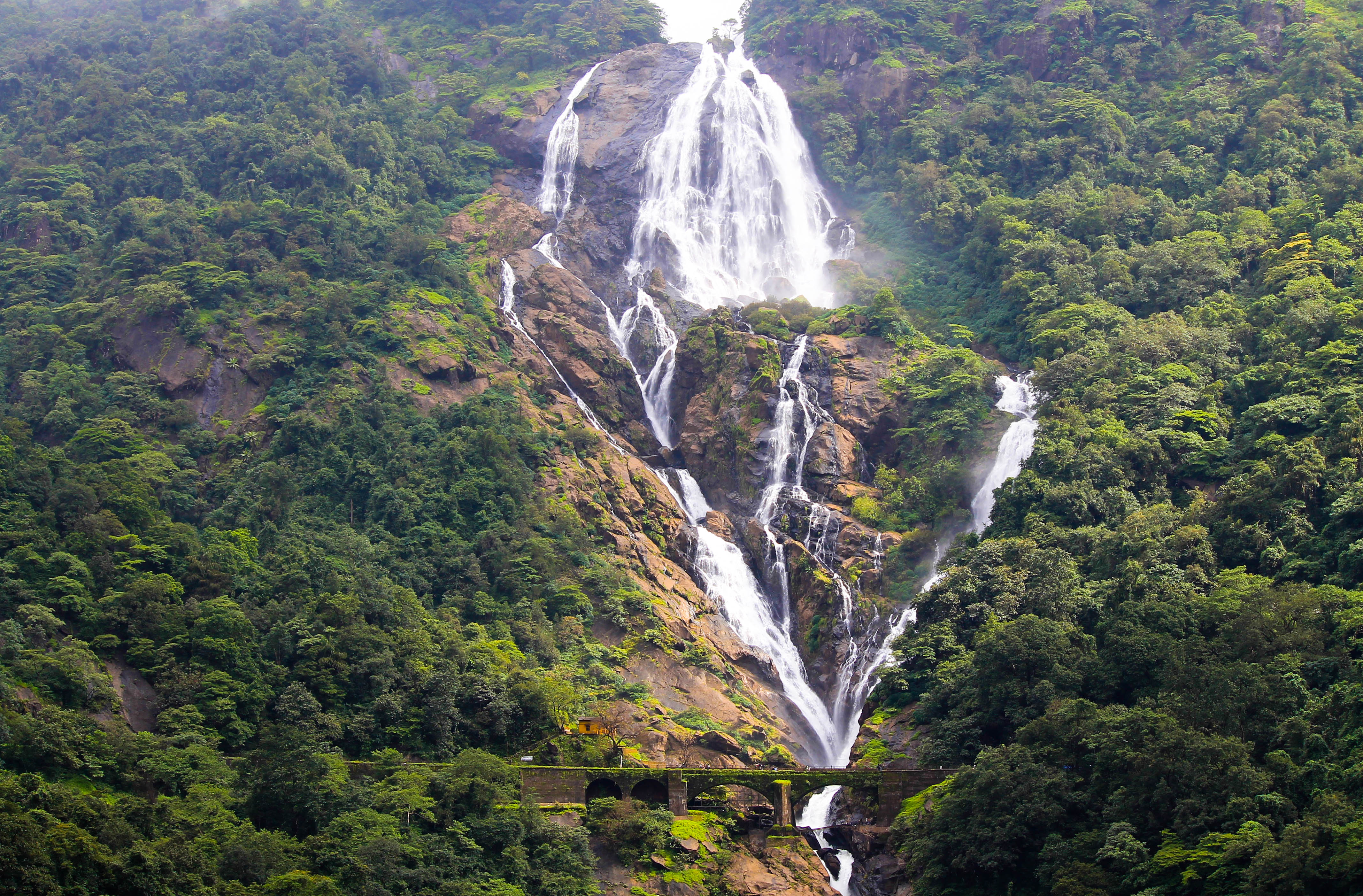
There are very few waterfalls in India that are as instantly recognizable as Dudhsagar Falls. Rising dramatically through the dense forests of the Western Ghats, this four-tiered waterfall looks like a giant river of milk pouring down the mountainside, which is exactly how it earned its name. During monsoon, Dudhsagar transforms into one of the most spectacular natural sights in the country. The roar of the water, the surrounding rainforest, and the sight of a train crossing the famous bridge in front of the falls create a scene that feels straight out of a movie.
What makes Dudhsagar unique is that it completely changes people's perception of Goa. Travelers arrive expecting beaches and sunsets but leave talking about mist-covered forests, mountain landscapes, and one of India's most powerful waterfalls. If you're planning a monsoon trip to Goa in 2026, Dudhsagar deserves a full day on your itinerary rather than a quick sightseeing stop.
What Budget Should You Plan?
Dudhsagar can be explored on almost any budget.
Budget travelers can expect to spend around ₹4,000–₹6,000 by staying in affordable guesthouses and using shared transportation.
Couples and families generally spend ₹8,000–₹15,000 for a comfortable trip with private transport and quality accommodation.
Travelers combining Dudhsagar with a premium Goa vacation should budget ₹20,000 or more.
Since Goa offers accommodation options for every price range, you can easily adjust the trip according to your travel style.
When Does Dudhsagar Look Its Best?
While the waterfall starts becoming active in June, the most dramatic views are usually seen between August and early October. This is when continuous monsoon rainfall fills the river system and turns Dudhsagar into a roaring white cascade.
For photographers, slightly cloudy days often create the most dramatic scenes. Bright sunshine is beautiful, but moving clouds and light mist add a cinematic atmosphere that makes Dudhsagar truly unforgettable.
Local Tips Most Travel Guides Won't Tell You
Many visitors focus entirely on the waterfall and miss the incredible rainforest scenery surrounding it. Slow down and enjoy the journey rather than rushing to the viewpoint.
If weather conditions allow, spend time near the railway bridge area where some of the most iconic views can be captured.
Avoid planning your visit on long weekends if possible. Dudhsagar becomes significantly more enjoyable on weekdays.
Monsoon conditions can affect accessibility, so always check local updates before leaving.
Consider staying overnight nearby. The forest atmosphere during rainy evenings feels completely different from daytime visits and adds another dimension to the experience.
3. Athirappilly Falls, Kerala
Athirappilly Falls isn't called the "Niagara of India" without reason. Stretching across a broad section of the Chalakudy River, this magnificent waterfall creates a wall of water that becomes even more dramatic during Kerala's monsoon season. The first thing most visitors notice isn't the waterfall itself but the sound. Long before you reach the viewpoint, the roar of water echoes through the surrounding rainforest.
What makes Athirappilly special is how immersive the experience feels. Unlike waterfalls that are admired from a distance, here you're surrounded by lush forests, cool mist, and the constant energy of rushing water. The landscape is so photogenic that it has appeared in numerous Indian films, yet it still feels surprisingly natural and untouched.
What Budget Should You Plan?
Athirappilly is suitable for every type of traveler.
Budget travelers can comfortably explore the area within ₹3,500–₹6,000.
Couples and families typically spend between ₹7,000–₹12,000.
Luxury travelers staying in premium nature resorts can expect costs above ₹15,000.
The destination provides excellent value because the natural beauty itself becomes the main attraction.
When Does Athirappilly Look Its Best?
The waterfall reaches peak beauty between June and September when monsoon rains continuously feed the Chalakudy River. August is often considered the ideal month because the waterfall remains powerful while road conditions are generally manageable.
Early mornings after an overnight rainstorm often provide the most beautiful scenery, with mist floating across the forest and sunlight breaking through the clouds.
Local Tips Most Travel Guides Won't Tell You
Don't stop at the first viewpoint. Exploring both upper and lower sections reveals completely different perspectives of the waterfall.
Stay at least one night nearby if possible. The atmosphere during early morning hours is often more memorable than the waterfall itself.
Wildlife enthusiasts should keep an eye out for birds and smaller forest species in the surrounding rainforest.
Visit on weekdays if possible for a quieter experience.
If rain becomes heavy, don't rush away. Some of the most dramatic waterfall views appear immediately after rainfall slows down.
4. Nohkalikai Falls, Meghalaya
Standing at the edge of the viewpoint overlooking Nohkalikai Falls feels like standing above the clouds. Located near Cherrapunji in Meghalaya, this is India's tallest plunge waterfall, and during monsoon it becomes one of the most mesmerizing sights in the country. Massive cliffs disappear into moving fog while a ribbon of water plunges dramatically into a turquoise pool far below.
Unlike many waterfalls that offer predictable views, Nohkalikai constantly changes its appearance. The weather shifts every few minutes, creating a new scene each time the clouds move. This unpredictability is exactly what makes the destination so memorable.
What Budget Should You Plan?
Traveling to Meghalaya requires slightly more planning but rewards visitors with some of India's most unique landscapes.
Budget travelers usually spend ₹5,000–₹8,000.
Comfortable mid-range trips generally cost ₹10,000–₹18,000.
Luxury experiences often exceed ₹20,000.
The majority of your expenses will come from transportation rather than attraction costs.
When Does Nohkalikai Look Its Best?
The waterfall is most impressive between June and September when Meghalaya receives some of the highest rainfall in the world. During this period, the waterfall reaches maximum flow and the surrounding valleys become incredibly green.
However, visibility can change quickly, so flexibility is important when planning your visit.
Local Tips Most Travel Guides Won't Tell You
Patience is everything here. Many travelers arrive during foggy conditions and leave too quickly.
Wait at least 20–30 minutes before giving up on visibility.
Morning visits generally provide more stable weather conditions.
Combine your visit with nearby attractions in Cherrapunji for a fuller experience.
Bring a light waterproof jacket even if the forecast appears clear because weather changes rapidly.
5. Chitrakote Falls, Chhattisgarh
Often referred to as the "Niagara Falls of India," Chitrakote Falls remains one of the country's best-kept travel secrets. During monsoon, the Indravati River expands dramatically and creates a massive horseshoe-shaped waterfall that stretches across the landscape. The sheer width of the waterfall is what leaves most visitors speechless.
Unlike many popular tourist destinations, Chitrakote still feels relatively untouched. The crowds are manageable, the surroundings feel authentic, and the experience is more about connecting with nature than ticking off a famous landmark.
What Budget Should You Plan?
One of the best things about Chitrakote Falls is its affordability.
Budget travelers can comfortably visit within ₹3,000–₹5,000.
Families and couples generally spend ₹6,000–₹10,000.
Luxury stays and private experiences may cost slightly more.
Overall, Chitrakote offers one of the best value-for-money monsoon experiences in India.
When Does Chitrakote Look Its Best?
The waterfall is at its grandest between July and October when monsoon rains swell the Indravati River. During this period, the waterfall reaches its maximum width and creates the powerful visual spectacle it is famous for.
Late afternoons and sunset hours are particularly rewarding for photography.
Local Tips Most Travel Guides Won't Tell You
Don't limit yourself to the main viewpoint; explore different angles around the area.
Stay until sunset if possible. The changing light often creates spectacular scenes.
Spend time exploring nearby villages and cultural attractions rather than treating the waterfall as a standalone stop.
Visit after a few days of steady rainfall for the most impressive water flow.
Carry binoculars if you enjoy landscape photography, as the surrounding scenery is surprisingly rich and diverse.
Conclusion
The beauty of monsoon in India isn't just about the rain—it's about how the entire landscape transforms when the first clouds arrive. Rivers become powerful, forests turn a deeper shade of green, and waterfalls that remain calm for most of the year suddenly come alive with incredible force. From the thunderous roar of Jog Falls in Karnataka and the iconic beauty of Dudhsagar in Goa to the rainforest charm of Athirappilly, the mist-covered cliffs of Nohkalikai, and the hidden grandeur of Chitrakote, each destination offers a completely different experience of India's rainy season.
What makes these waterfalls truly special is that no two visits are ever the same. A passing cloud, a fresh burst of rain, or the golden light breaking through a storm can completely change the view in a matter of minutes. That's the magic of monsoon travel—it rewards those who slow down, embrace the unexpected, and allow nature to set the pace.
So if you're planning a getaway in Monsoon 2026, skip the usual tourist checklist for a while. Take the scenic road, listen to the sound of rushing water echoing through the valleys, and experience some of the most breathtaking natural wonders India has to offer. Sometimes, the best travel memories aren't made in crowded cities or famous landmarks—they're found standing quietly in front of a waterfall, watching nature put on a show you'll never forget.